
Niko-niko calendar

https://management30.com/practice/niko-niko-calendar/
Introduction
The Niko-niko calendar is the application of a very important principle in Agile project management defined by American engineer and Agile expert Tom Gilb:
“Everything you need to quantify can be measured in a way that simple to not even measuring it.”
The analysisdoes not have to be perfect or accurate. The goal is to quantify something that didn’t exist before.
Mood and feelings are constantly tested, not only against the Project Manager, Product Owner or Scrum Master, but also across the entire team, especially the Development Team and can be easily mapped through a Niko Niko Chart.
After all, we are human beings, and as human beings we are sensitive to mood swings due to the simplest factors internal or even external to the organization.
So, the question is:
Do you know your mood and that of your team?
Can you easily identify reasons why your or your team’s moods vary?
If you don’t know, unfortunately my friend, I have to tell you.
IT SHOULD, because only with this knowledge can we balance ourselves through facts that bother us.
Explain the Practice
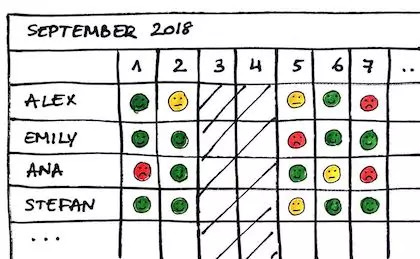
Niko-niko should follow some principles:
Everyone’s mood must be visible.
It should never be used against anyone or considered as an individual goal.
Moods must be observed during the daily meeting(following day)
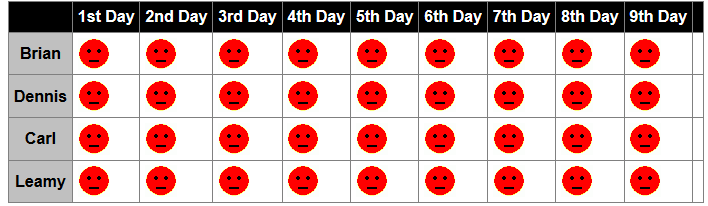
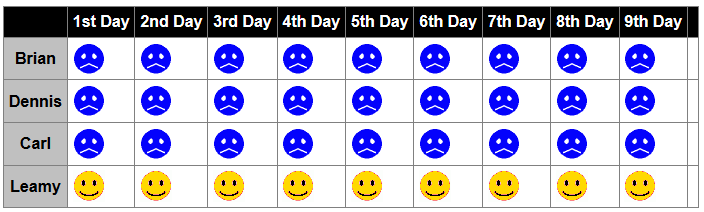
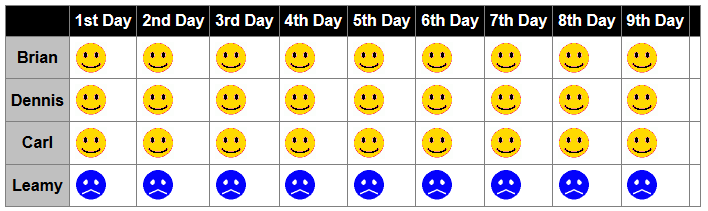
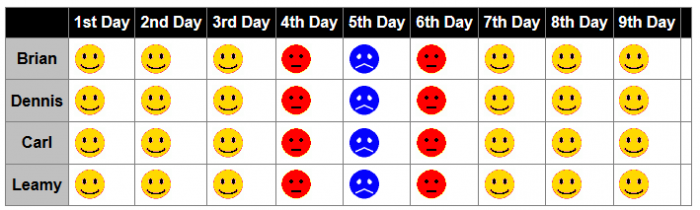
The manager / team leader / scrum master should try to understand and address the “abnormality”, good or bad: a common bad day shared by the entire team, a person who is constantly happy while the rest of the team is unhappy, and vice versa , a general deterioration in the team’s mood, a shared “happy” mood even if the project isn’t going well.
Despite its funny name, it is a powerful tool to identify, as mentioned above, not only your mood, but that of your entire team.
Created by the Japanese Akinori Sakata, Niko Calendar is a very simple tool to represent, in a transparent way, all the mood, feelings, motivation and moral presented by the members of your work team.
Through a table divided into rows and columns, where each row represents a team employee, and the columns represent the days of the Sprint.
Each member reports, at the end of the day, a representative image of their feelings during the day.
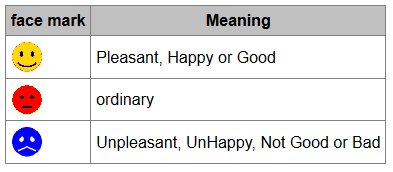
Happy or motivated;
Normal or neutral;
Unhappy or unmotivated.
Why did you decide to use this practice
After using some dynamics Management 3.0
With the team, it became simpler to suggest that we check the mood of the team members.
The team accepted and applied the Niko-niko calendar.
Niko Calendar is a very simple form of feedback from the team about their motivational state and more than that it makes each team member reflect a little more about how the work day went and think about how to improve the day Following.
In addition to the obvious function of serving as a thermometer of how comfortable and motivated the team is, that’s why it’s important that everyone uses the calendar correctly, actually reporting their actual mood at the end of the day.
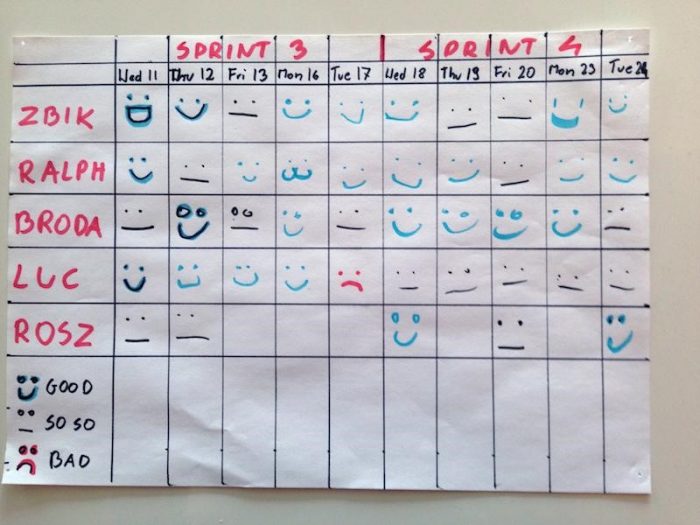
How did you use this practice
We add the niko niko calendar to a miro board and use it daily in our scrum/lean ceremonies.
Before dailly meeting, collaborators added the level of humor.
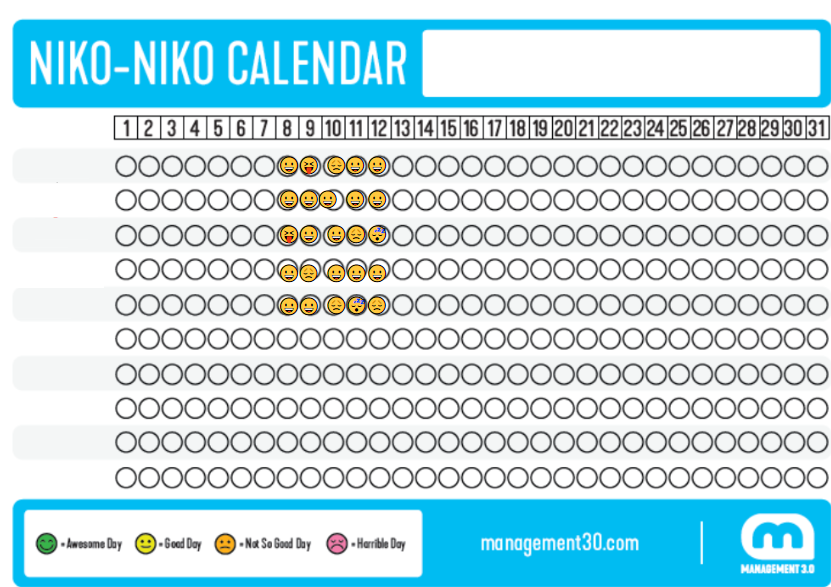
Thus, it will be up to the Scrum Master, servant leader and team coach, the task of identifying such feelings, intervening positively when necessary.
We share the link so that it is part of the scrum/agile rites and is easily remembered by everyone on the team.
We generate the chart into lines and columns as mentioned above, according to the number of team members;
We leave the emotions close to the board in the miro in order to facilitate its daily filling.
And we monitor your team’s mood and feelings, the scrum master or agile coach is responsible for intervening when something is off the patterns.
Pattern identification
Your learnings as facilitator
After applying the niko niko calendar, it became much easier to know how to deal with the team’s collaborators.
Because we knew how and when to get to speak at follow-ups or meetings.
By knowing the collaborator’s mood, it was easier to understand what is happening to him on a daily basis.
As powerful as it is, this tool shouldn’t necessarily be used just to monitor your team’s feelings.
We can use it to monitor our own feelings in order to begin to identify our own feelings in certain situations we witness or experience.
Successful Project Managers know their own feelings and know when to act.
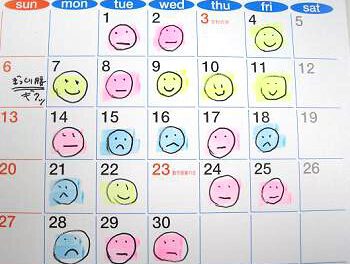
The possibility to obtain and analyze your team’s feelings is a unique opportunity not only for reflection but also a general understanding of the behavior of each member.
Furthermore, the possible identification of patterns presented as the graph is filled in becomes a powerful indicator that should be used by the person responsible for the project.
When idenfying non-user behavior patterns, we trigger the agile coach/scrum master to intervene and understand what is happening with a certain employee/team.
If the mood is in a pattern of happiness, we celebrate with the employees/team the reason for that happiness.
If the mood is in a pattern of sadness/dismay, we intervene in the team to look for the reason for that feeling.
There are cases where team members are unhappy in one squad and happy in another.
Niko-niko makes it easier for us to have a clear view of the mood of the team/project.
Moving Motivators
https://management30.com/practice/moving-motivators/
Introduction
There are questions that are difficult to answer.
Who are you?
How do you see yourself in 5 years?
Why are manhole covers round (by Google)?
How much would you charge to wash all your Seattle windows(by Facebook)?
I know that answering this question is challenging, after all what should I consider to answer this question?
Passion?
Money?
Challenge?
But if in addition to this question I still asked you:
What moves your team?
Take a deep breath and let’s go.
Seeking to better understand our internal strength, here at Rede/Itau, in the software development sector, we are looking for methods that we can understand better.
We found in Management 3.0 a very good tool to apply to teams: the Moving Motivators game.
This game brings a personal reflection as a team, where each one can express to the other members what drives them forward and makes them come to work every day.
The game was created by Jurgen Appelo and brings in its cards 10 personal motivations that can give a direction to answer the question in this post.
Are they:
Curiosity: I have plenty of things to investigate and to think about.
Honor: I feel proud that my personal values are reflected in how I work.
Acceptance: The people around me approve of what I do and who I am.
Mastery: My work challenges my competence but it is still within my abilities.
Power: There’s enough room for me to influence what happens around me.
Freedom: I am independent of others with my work and my responsibilities.
Relatedness: I have good social contacts with the people in my work.
Order: There are enough rules and policies for a stable environment.
Goal: My purpose in life is reflected in the work that I do.
Status: My position is good, and recognized by the people who work with me.
Each card brings a description of each motivation, to better apply with your team and can be better understood through this link.
Explain the Practice
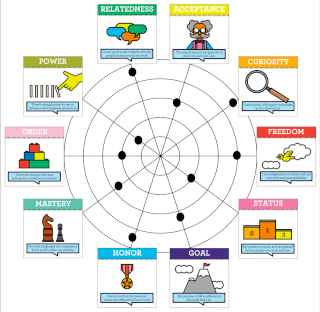
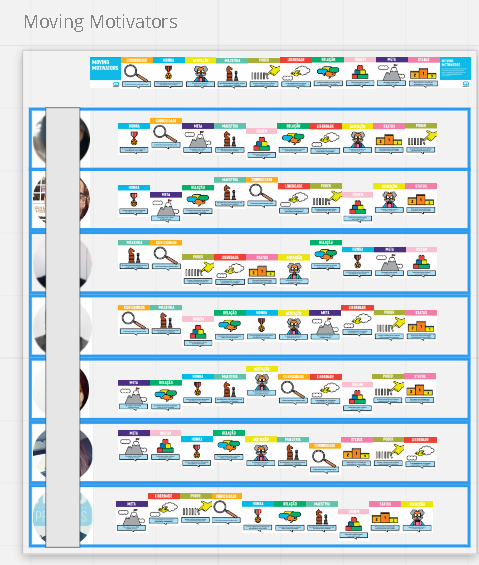
Moving Motivators consists of 10 cards with different motivators, as shown in the image below.
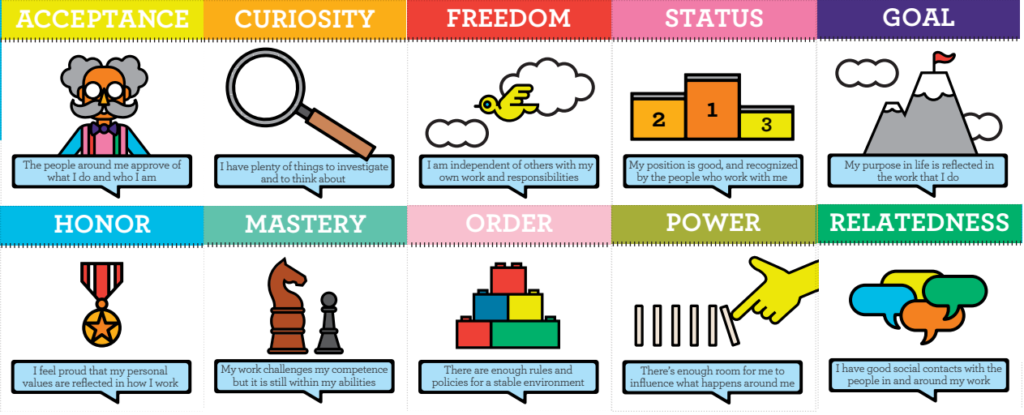
I gave a brief presentation on the 10 Motivators of Moving Motivators.
Each member individually arranged the cards according to their preferences, from the highest motivator to the lowest, in order according to their priority from left to right.
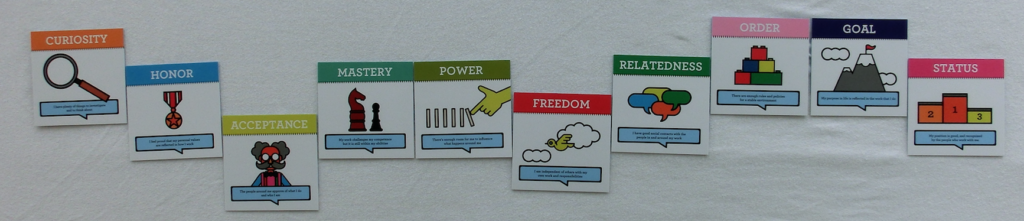
Afterwards, each member explained their sequence to the others, generating a great debate and lots of interaction.
It was a very pleasant time, with a lot of conversation, without haste, and each one could freely expose their impressions.
A final step that I asked everyone was to assess the current context of their actions in the team, checking whether their motivators are being met (cards up) or not (cards down).
We then had a very productive discussion about this analysis.
I suggest doing some provocation at this point to generate more details and also take the opportunity to take notes on what you think is important;
As we are all working on a Home Office basis, I used the Miro tool for the visual and collaborative experience.
I was careful to put their image on their decks, and I also decided to participate in the exercise, so they could also get to know me better.
Why did you decide to use this practice
Motivating the team and giving feedback to employees were the decision points to apply this dynamic.
Our team need oxygenation and incentive for a new project that was to come.
We decided with the team to understand the motivators that made the wheel spin.
With the data obtained in the dynamics, it is possible to animate the team and make the future challenge not so great.
The feedback from the guys was really cool, they loved the activity, and I felt that there was a much greater sense of unity among the team.
Everyone was able to get to know each other a little more and strengthen ties, and we were able to validate some of the team’s structures and their functioning.
Understanding what motivates collaborators gave us the way to know how to act.
These motivators give the necessary freedom and encouragement to each team employee.
How did you use this practice
After explaining to the team that the goal of the dynamic will be to get to know us better individually and collectively, we invite members to individually reflect on which motivators are most important to them.
We put the board (miro) and present and explain the motivators one by one, asking them to put from left to right and top to bottom the motivators that are most important to them.
From left to right in level of importance.
From top to bottom if they are attended. (up attended/ down not attended).
In online action, we open questions to provoke good debates.
From then on, we requested the points that generated an impediment and made the values go down (not met)
The team defined the necessary points for the motivators that were not being met.
And the leaders committed to supporting employees in achieving the motivators.
Quarterly we repeat this dynamic seeking to equalize the team’s motivation.
Your learnings as facilitator
With dinamica we can have many gains, whether for the team’s self-knowledge and knowledge, it also serves to create harmony and trust with the team, as people talk more about themselves, opening up more.
At the end of the application, we decided to tabulate — in, spreadsheet — the data of all participants.
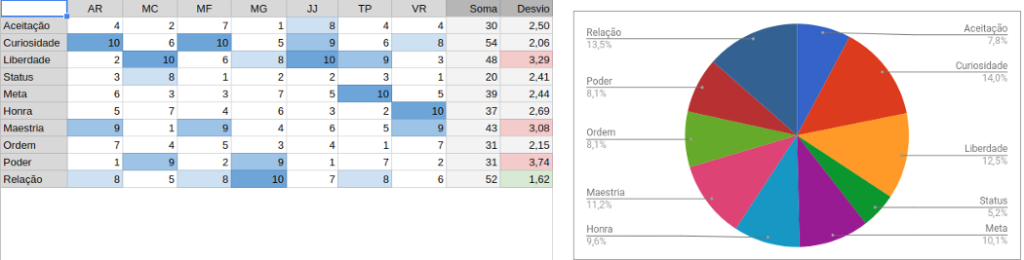
This helps the manager to be able to verify the motivation points of his team and try to achieve faster happiness and efficiency of his team.
Another benefit that we see is that the manager can be applied when hiring candidates, analyzing in which team they would have more motivational affinities, or even in which team this candidate would be complementary, adding a new motivation to the team.
Each employee is unique, understanding what motivates each individual and being able to monitor it can help you get the most out of each one. And when you manage to do this without negatively affecting everyone but positively things go well.
Achieving productivity and, at the same time, harmonically engaging everyone with your company’s goals is always positive.
The coolest thing is that despite this being a common practice in the company, the area I work in is relatively new and not everyone uses or knows this tool. But as the repercussion has been very positive, the General Manager of the area has already asked me to share the experience with the other Agile Masters in our operational review. And this agenda has already been included in the next meeting next week.
The cool thing is that it will be a great opportunity to talk about the dynamics, understand the different scenarios that others are situated in, and analyze adaptations that we can make in each context, creating something in the spirit of the tool, but customized for the specific context of each area. I can’t wait anymore.
Now it’s time to run the exercise with the more teams, capture the lessons learned, and think about when we should start a new cycle, with a new round of Moving Motivators.
After all, what moves you?
Work Expo
https://management30.com/practice/work-expo/
Introduction
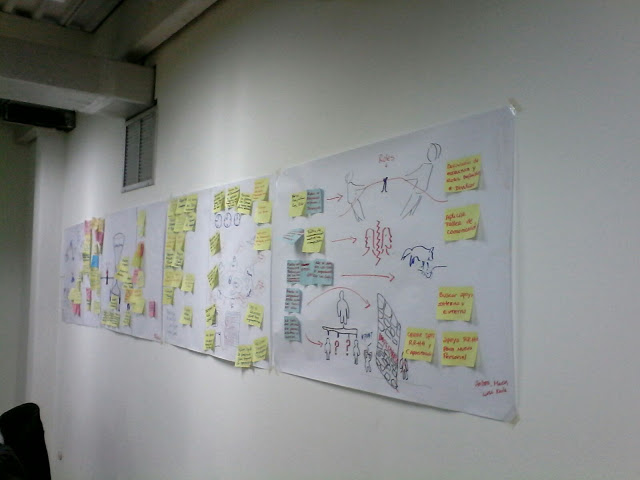
Work Expo is the metaphor of making and exhibiting in a playful and collaborative way to create visual messages of the team’s values, the reason for being in a team and anchoring it in the minds and spirit of our employees.
It’s one of the simple practices in Management 3.0, but its value lies in the metaphor that makes the collaborative activities you can with your people to create a team identity visible and public.
How to view a purpose?
How to share a vision?
How to tell your story?
Often the organization has a vision, a mission statement (for your organization, your product, your team)
But words don’t get the message across.
What you should shows, don’t tell!
Explain the Practice
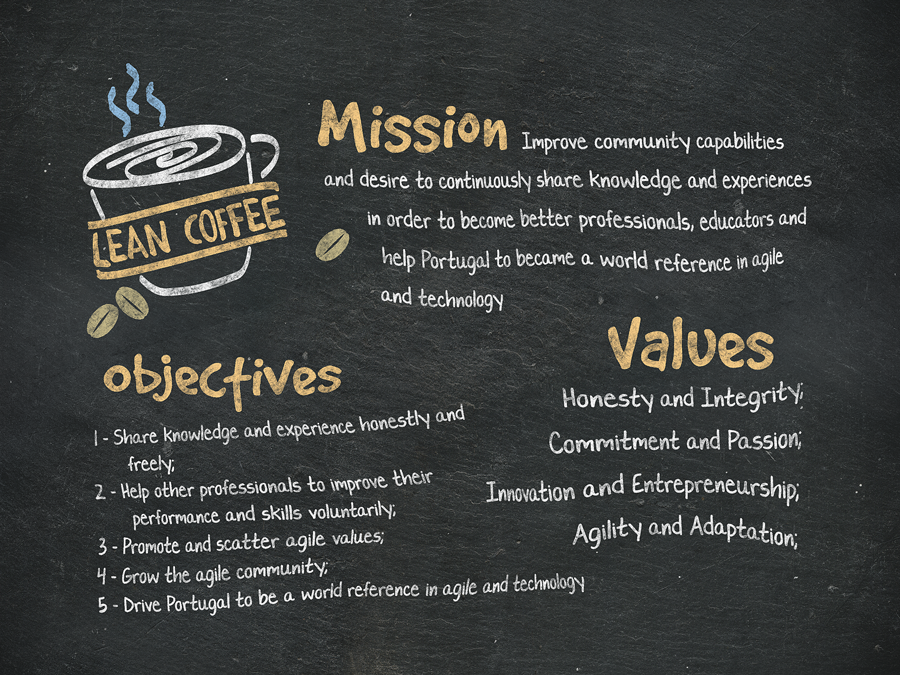
Each team has its own identity.
Because of the pandemic, we changed the way we do Work Expo.
We generate visual spaces in our management systems.
In conjunction with scrum, agile and lean methodology, we use ceremonies to make our identity presentations.
During our meetings, we display our values, needs, agendas, backlog, important information, dashboards, etc.
Our sprint (scrum) lasts two weeks.
At the beginning of a new sprint, we ask the team the following question:
What is the purpose of the project, phase or sprint, etc. for the team?
After this introspection we define the backlog, generate the metrics and the important data and values that we will display and monitor daily.
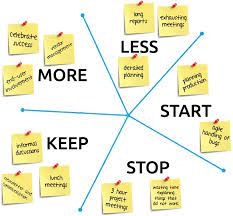
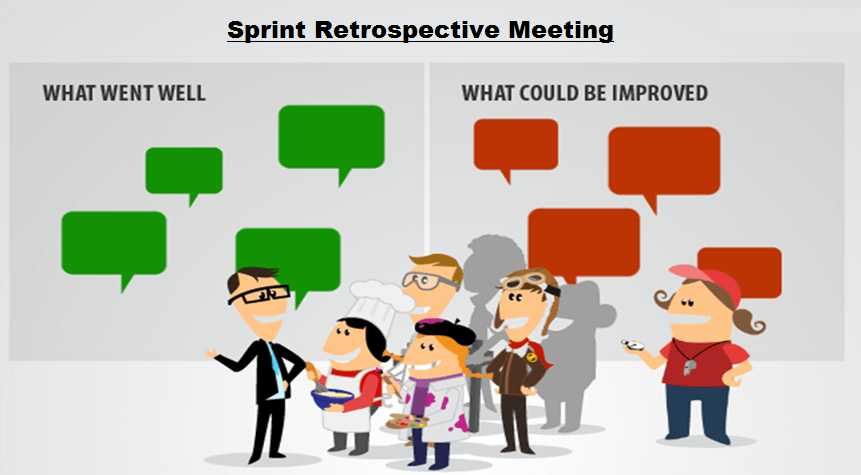
During the retrospective:
What are your favorite stories about the project, phase or sprint (good and bad), (What did we do right? What did we do wrong?
At each retrospective, we follow up to measure the metrics and understand if we are on the right path.
In addition to data relating to business objectives and tasks, we know the profile of our employees.
Example:
Soccer team
Birthday
Name of children/wife father and mother
Every Friday we have a short Friday where we socialize and one team shows the other the results and values.
Why did you decide to use this practice
To show employees what the company is doing and bring a sense of ownership to the team.
Who doesn’t have one reason doesn’t know the why.
Leave clear our purposes, goals, objectives, the reason for our existence and where we are going.
That was our intention, to inform the team collaborators about the reasons for things happen.
When you know the reason for your existence, everything is easier to reach.
With objectives and goals make the team responsible for the purpose.
With the data and information on the display (visible) everyone knows which direction the company is heading.
And with the feeling of belonging
How did you use this practice
We create a family feeling with the teams.
Each team went through a process of getting to know each other and getting to know each other using dynamics: Personal Maps.
After the personal maps process, we populate our systems with information relevant to each team and team.
Example:
heart team
Wife Name
Birthday
Wedding day
Projects you are involved in.
And in our management systems, everyone has access to complementary information of the company’s employees.
Our company works with scrum and lean methodology.
At each new sprint, we work together with the team to show the reasons for that new challenge and/or project.
And at each retrospective we show if our goals and objectives were met and also where we can improve.
Your learnings as facilitator
We were able to generate concise metrics and make the team’s employees aware of the company’s goals and objectives.
We generated OKRS and our team became more committed and aware of the steps the company is taking and where it is going.
It was simple to identify the purpose.
The team grew in maturity and creativity.
We use the information as points to define what we will do in our future.
The Work Expo has served us the feeling of belonging of the teams with the company.
With relevant and easily accessible information, collaborators have a way to identify and resolve their own conflicts.
Teams that need to work together now manage to understand who will be sharing the task before getting their hands dirty.
Now teams feel comfortable to switch teams and even pivot a job or project.
Personal Maps
https://management30.com/practice/personal-maps/
Introduction
In today’s corporate scenarios, we often work years at a time with the same people, but without knowing them well enough.
This distance can generate a lack of engagement between the teams, impact the progress of activities and directly interfere with the quality of product delivery. Mainly when dealing with remote or distributed teams.
Getting to know the people we live with significantly improves the levels of collaboration, engagement, communication and creativity, in addition to generating empathy with other team members.
Establishing this proximity allows us to access details of the other person’s life, know their preferences, challenges and projects, whether professional or personal. This leads us to understand the moment of each one’s life and, above all, to eliminate labels and prejudices.
Personal Maps is an excellent retrospective to increase the connection between team members. Light, fun and simple to apply.
As the team evolves and grows, getting to know the people who are part of the team becomes necessary.
The dynamic application of the Personal Maps is valid to connect people and generate team building and use it to increase the team’s energy.
The Personal Maps is a Management 3.0 tool based on personal information, which aims to reduce the personal distance between team members.
The tool is very simple, but it has a powerful effect.
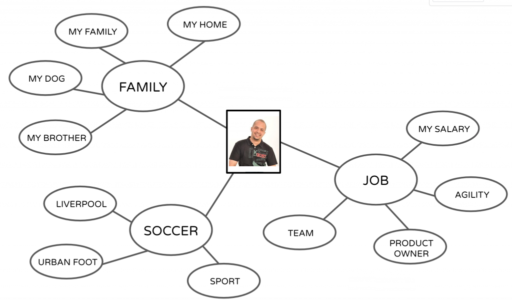
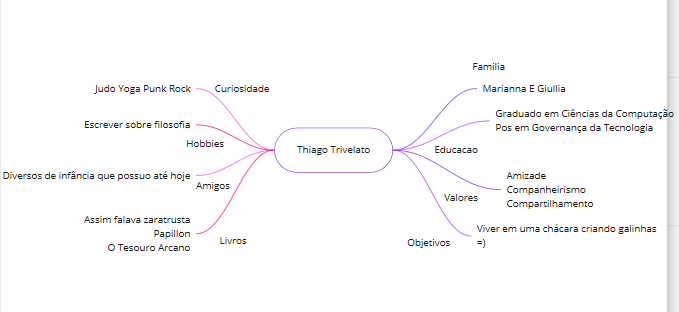
The idea is to build a mental map with each person’s personal information, such as family, education, work, hobbies, values, friends, goals, among others.
Explain the Practice
Initially, it is worth emphasizing that this is a collaborative tool, therefore, it is more efficient when applied with all team members.
To exemplify the applicability of Personal Maps, using a dynamic that I experienced during a Team Building of the team I work. A fantastic experience.
As a facilitator, you must explain over time the concept of personal maps, their applicability and how the proposed dynamic will work.
We started with an energizer, tell me how it is today? How did you get today?
Using a Miro platform, I created several skeletons of personal maps, using a mind map template like the one in the image below:
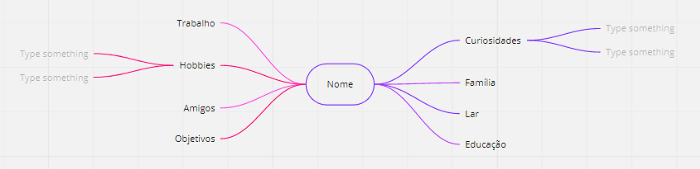
In collaboration, we defined which themes to explore.
What would you like to know more about each colleague? EX: (Leisure, gastronomy, travel, movies, music, work, etc.)
I created a template for each team member and organized it into a circle, indicating that, when entering the room, they should choose one of the templates and replace the word “name” with their name.
We set a timebox (3 min) and asked people to start their own maps.
They can write and/or draw categories (family, cities, hobbies, music, characteristics, etc.) and pull into those categories related to each of them.
As soon as the timebox ended, I asked everyone to show the drawing, a new timebox given for the next round (2 min).
In this new round, like the people who completed a little more the map that was with them.
I made it clear that I had no definite way of using time.
They write, draw, complete Face Drawing drawings or anything else that enriches the map that was with them.
Why did you decide to use this practice
Our team is growing with new teams and collaborators.
We are a current company that is adopting agile in its work practices.
With the exponential growth of employees, we are generating knowledge déficit.
Each time the team evolves the knowledge and familiarity among the members of the work team decreases.
We carry out Personal Maps with the objective of bringing people closer to the team and increasing the level of knowledge and proximity to the times.
From Personal maps we generate a knowledge base of the team and how it behaves.
How did you use this practice
We use dynamics as an icebreaker in our team building.
*
Icebreaker is a popular term for breaking formalities and relaxing with people around you when it comes to activities and group dynamics, as icebreaker dynamics are popular, fun and full of motivation, helping you to relax as people and providing a better integration of the group or work team.
We held a squad meeting online via teams.
We use the miro app to draw online.
The timebox of the personal maps application was 1 hour in total.
Your learnings as facilitator
After everyone got their maps back, I gave everyone time to review their own maps.
I explained that each one would present their own map, answering some questions such as:
1-) What surprised you the most?
2-) What did you feel when reading your own map?
3-) Was it very different from how you imagined yourself?
The performances were a lot of fun and had a good laugh.
The team ended up being surprised by the amount of things that were known and with the discoveries about some stories and characteristics of some members.
With this dynamic, we were able to make the group more cohesive, creating a pleasant and welcoming environment for learning, making everyone learn and participate more and more.
We generate a sense of family with the team that cannot be replaced.
The teams came closer and everyone left refreshed with a sense of teamwork.
Our goal now is to apply this practice in person, and in this dynamic we will generate a logo for each generated team.
Now that you know the Personal Maps, don’t miss the opportunity to run it together with your team.
You will strengthen the bonds of affection between the team members, in addition to enjoying a lot of fun times.
Oh, and most importantly: adapt the Personal Maps to your context! Creativity always has a place in a retrospective.
And if you’re interested in learning more about tools like this, check out more about Personal Maps Management 3.0.
Tell us what you think here in the comments and, if you decide to run for your team, let us know how it went!